
Referral Program Marketing
Planning and management for customer referral programs, including the offer, participation rules, messaging, promotion, and ongoing review.
Serving United states & surrounding areas
Est. 2026
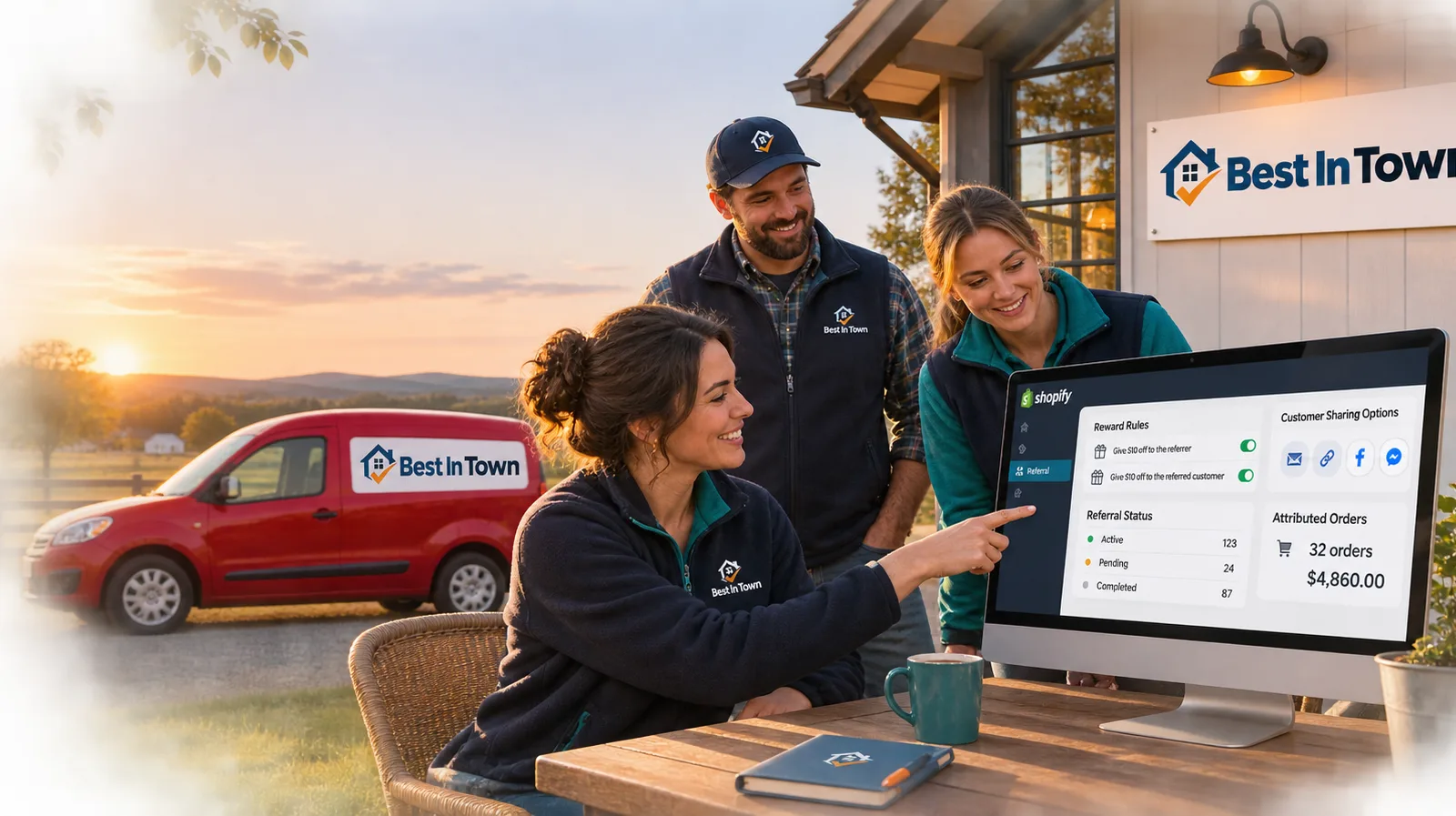
U.S. Referral Marketing Agency
Best In Town helps U.S. businesses build and manage customer referral programs with clear rewards, practical sharing tools, and trackable results.
See How It Works
Trackable Recommendations
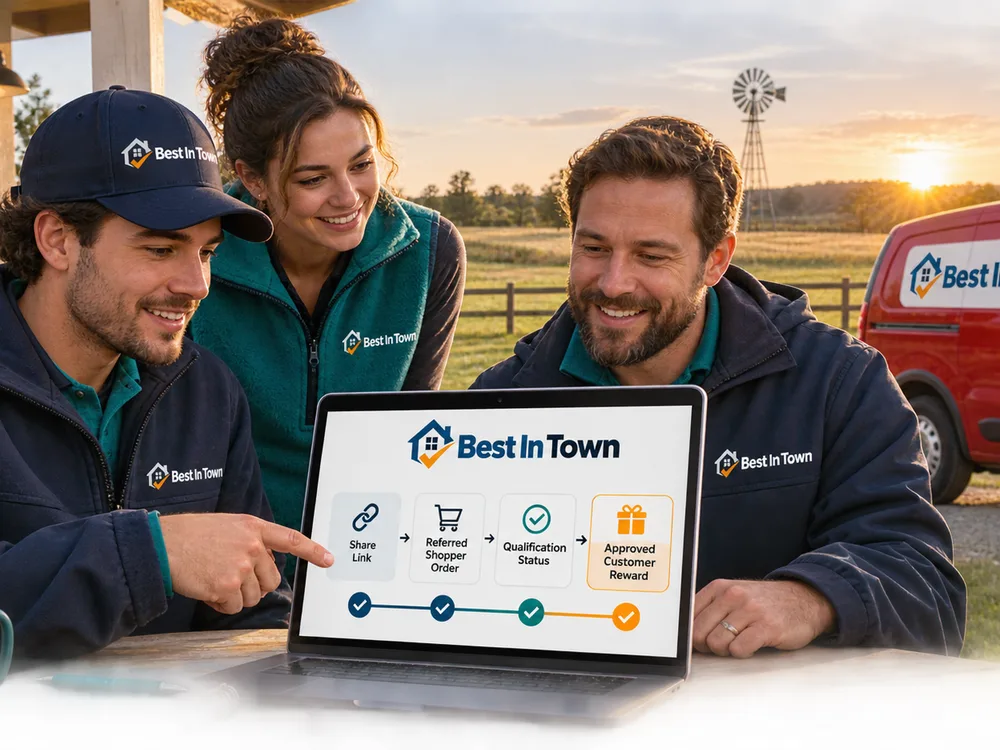
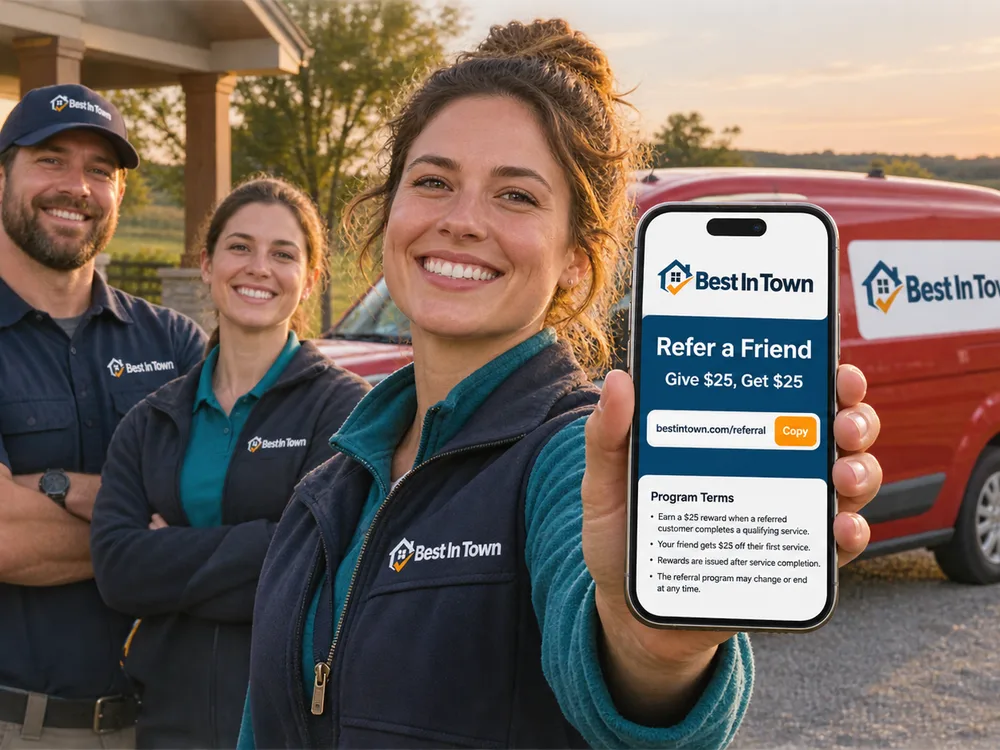
A customer referral program gives customers a defined way to recommend your business and receive a stated reward when a referral meets the program rules. Best In Town helps businesses replace informal word of mouth with repeatable referral marketing built around links or codes, reward conditions, and referral attribution.
The program should fit the way customers already buy. That means deciding who can participate, what qualifies as a successful referral, when rewards are approved, and how returns or cancellations affect eligibility. Clear terms help customers understand the offer, while tracking connects each advocate with the orders they influence.
Referral programs can support acquisition without replacing email, paid media, or organic marketing. They give satisfied customers a direct sharing path and give the business a record of participation, conversion status, and earned rewards.
Services and Tools
Planning and management for customer referral programs, including the offer, participation rules, messaging, promotion, and ongoing review.
Software for recording advocates, referral links or codes, qualified actions, reward status, and program activity in one organized system.
A practical look at U.S. referral program pricing factors, including setup, software, reward structure, integrations, and ongoing management.
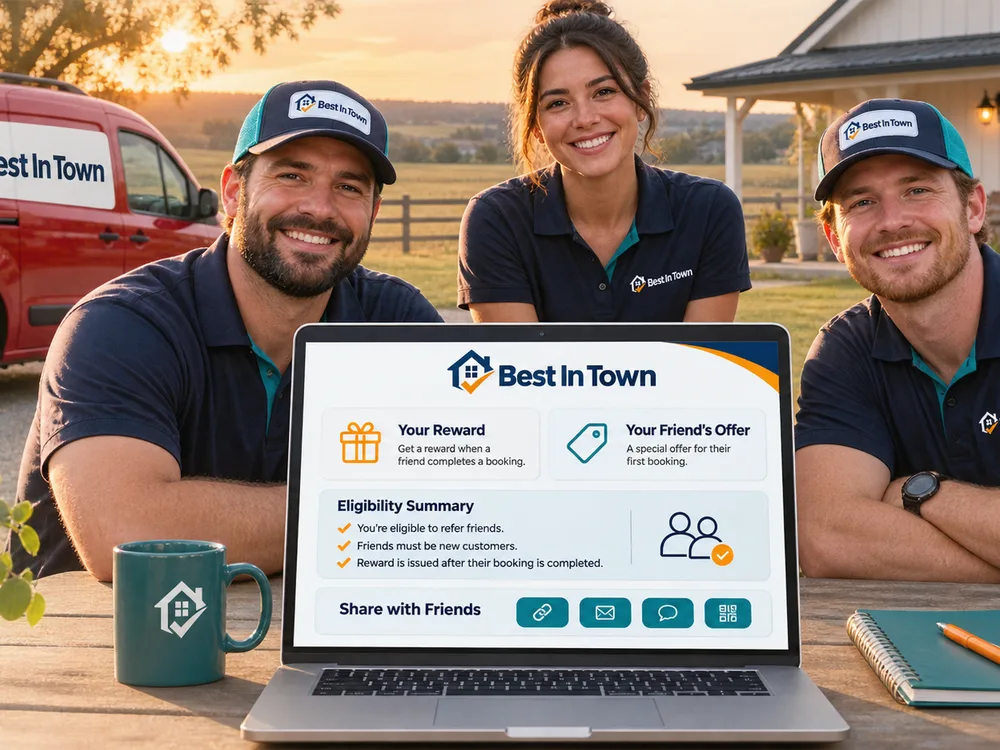
Define what the advocate receives, whether the referred customer also benefits, and which purchase qualifies. Reward rules should address minimum order values, excluded products, cancellations, returns, and approval timing.
Customers need an easy way to recommend the store through a referral link, code, email, or social channel. The sharing message should explain the offer without making customers interpret complicated conditions.
Tracking connects an advocate with a referred visit, account, or order. Cookie windows, discount codes, duplicate referrals, and last-click rules should be set before the program begins accepting participants.
Program terms can restrict self-referrals, repeated accounts, coupon-site posting, and other unwanted activity. A review process helps distinguish valid referrals from orders that do not satisfy the stated conditions.
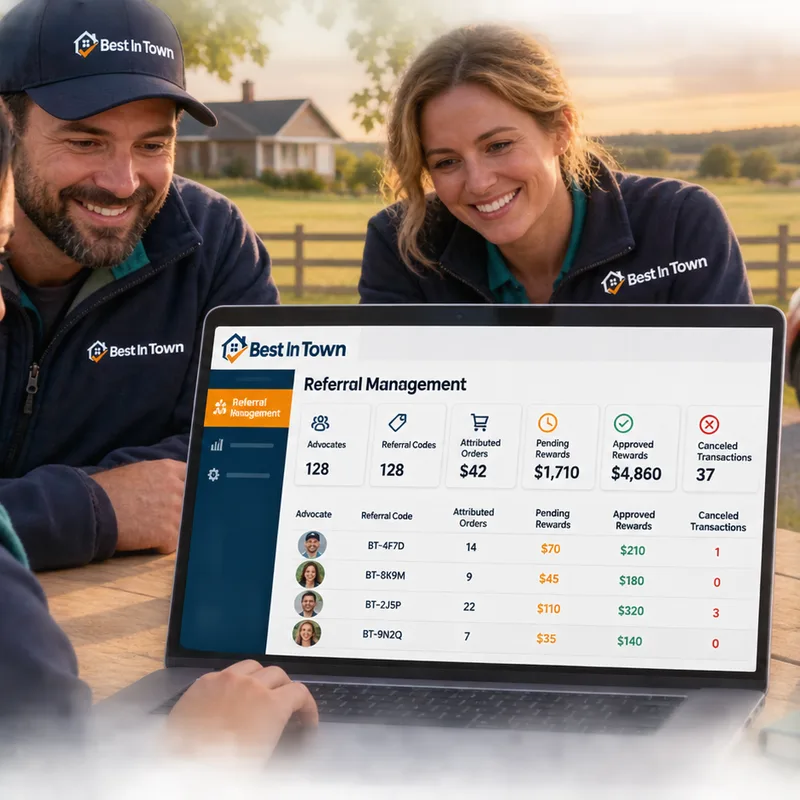
A useful dashboard records shares, referred orders, qualification status, issued rewards, cancellations, and refunds. These records help a business inspect program activity without claiming results the data cannot support.
Invitation emails, account prompts, post-purchase messages, and reward notices should sound consistent with the store. Customers also need concise explanations of eligibility, redemption, expiration, and support procedures.
Est. 2026
Founded by Wally Kline to help companies give customers a structured opportunity to act as referral partners.
The Business
Wally Kline founded Best In Town in 2026.
The business was created to help companies give customers a structured opportunity to act as referral partners. Its premise is straightforward: word of mouth remains a powerful form of promotion, and a working referral system makes recommendations easier to share and track.
For businesses, that means translating a basic recommendation into defined program mechanics. Best In Town focuses on the practical pieces behind referral program management, including the offer, customer participation, reward logic, sharing methods, and tracking requirements. The goal is to help a business put an organized process behind the recommendations its customers already make.
Program Investment
A referral program typically costs about $50 to $500 per month for software, while custom setup, strategy, design, or integrations can raise initial costs to roughly $500 to $5,000 or more. Simple programs usually use standard software and templates; more involved programs may require custom reward logic, branded pages, data migration, or developer work.
Final pricing depends on order volume, participant limits, reward type, automation, fraud controls, reporting, integrations, and ongoing management. Reward payouts are an additional operating expense. The exact cost is confirmed during consultation.
Program Process
Set the participant, referred-customer benefit, qualifying purchase, reward value, approval timing, and exclusions. This creates the rules used by customer messaging, tracking, and reward fulfillment.
Choose where customers encounter the program, such as account pages, post-purchase communication, email, or dedicated landing pages. Each entry point should lead to the same clear terms.
Set up links or codes, attribution logic, reward statuses, and relevant business-system connections. Test common situations, including repeat customers, canceled transactions, expired links, and duplicate referrals.
Introduce the program to eligible customers, then review participation, referred orders, approvals, cancellations, and reward records. Program changes should be based on observed activity and customer questions.
Give customers a clear reason and a simple method to recommend your business, with rules your team can administer.
Call for a Free QuoteNationwide Support
Best In Town supports U.S. businesses whose customers may buy, book, and share across state lines, so referral program rules must work for distributed audiences.
Dense multistate markets make consistent referral terms, customer eligibility, tax treatment, and reward communication important across neighboring states.
Stores serving fast-growing metropolitan and suburban markets can use mobile-friendly sharing and clear order-qualification rules for geographically dispersed customers.
Regional brands shipping across urban, suburban, and rural areas benefit from referral experiences that remain clear regardless of delivery zone or customer location.
Cross-state audiences require referral terms that address service areas, excluded offers, reward timing, and customer eligibility in plain language.
High mobile usage and varied state privacy requirements make consent, tracking disclosures, data handling, and easy sharing central program considerations.
Broad delivery areas make digital referral links, automated status updates, and clearly stated shipping restrictions more practical than location-dependent promotions.
Program Views

Frequently Asked Questions
Yes, Best In Town can review the structure of an existing program. The review can cover reward rules, sharing paths, referral attribution, customer messaging, approval timing, and how returns or cancellations affect rewards.
The business should provide its current sales process, intended participants, proposed rewards, exclusions, cancellation or return policy, and current marketing tools. Existing email, loyalty, discount, affiliate, or customer-management systems may also affect program design.
The reward model can be selected around the store's operations and customer experience. Discounts, store credit, and other incentives need explicit qualification, redemption, expiration, cancellation, and tax rules before launch.
Tracking can be planned around referral links, codes, or a combination of both. The chosen software and business systems determine attribution windows, duplicate handling, transaction status checks, and the records available for review.
The core planning method can apply across industries, but the rules and customer journey must fit the business. A real estate referral program, dental referral program, roofing referral program, or HVAC referral program may involve different qualification events and compliance concerns.
Best In Town's referral-service concept can apply to customer recommendations for service businesses. A salon referral program, gym referral program, plumbing referral program, insurance agency referral program, contractor referral program, chiropractic referral program, restaurant referral program, law firm referral program, or spa referral program needs terms suited to that field.
Yes, promotional ideas can be considered within the program's actual booking, purchase, and reward process. For a salon or spa, that might mean defining whether a completed first appointment, a paid service, or a qualifying retail purchase earns the reward.
Start by describing the business, current tools, customer base, proposed reward, and the action that should count as a successful referral. Best In Town can then discuss the program structure and tracking needs.
Next Step
Tell Best In Town how customers currently discover and recommend your business, and discuss a referral program with clear participation, reward, and tracking rules.