
Source attribution
Unique codes and trackable cards connect a referral to the customer, partner, employee, location, or campaign that generated it.
Serving United states & surrounding areas
Est. 2026
Referral Tracking Software · United States
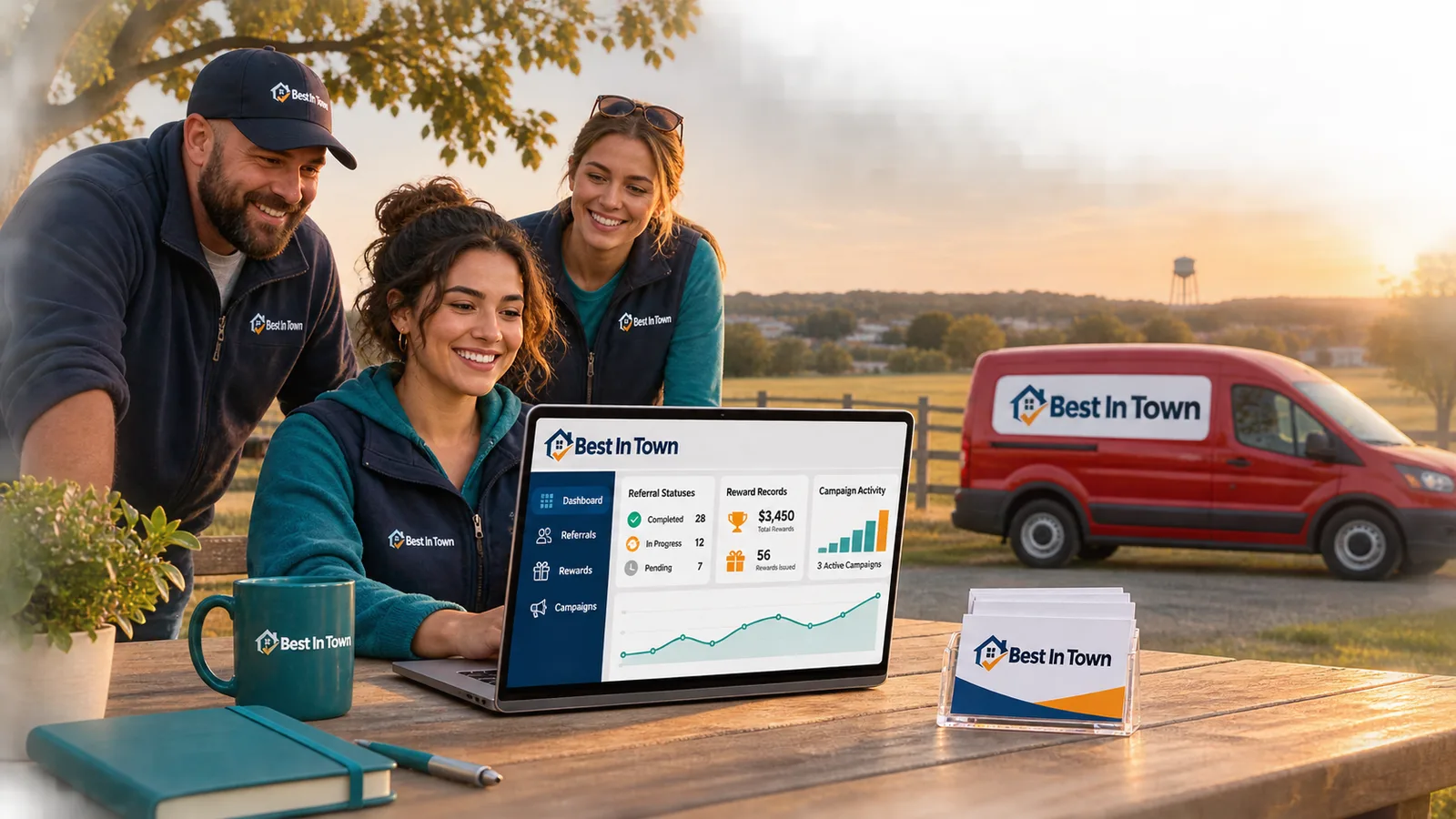
Give referrals a clear path from card distribution through reward fulfillment, with program activity organized in one place.
Referral Program Scope
Referral tracking software replaces scattered notes and disconnected spreadsheets with a consistent record of who made a referral, which offer they shared, and what happened next. Best In Town helps businesses turn customer recommendations into an organized referral rewards program instead of relying on memory.
A useful system gives each referral card, code, or digital offer an identifiable source. Staff can record activity at agreed milestones, review pending rewards, and keep the rules accessible to everyone involved. That matters whether customers share recommendations face to face, through email, or on social channels.
Founded in 2026 by Wally Kline, Best In Town is built around a straightforward idea: word of mouth is powerful, and businesses should have a system that puts it to work. At Best In Town, United states' new page specialists organize the practical parts of referral activity so participating businesses can focus on customer relationships.
Tracking Essentials
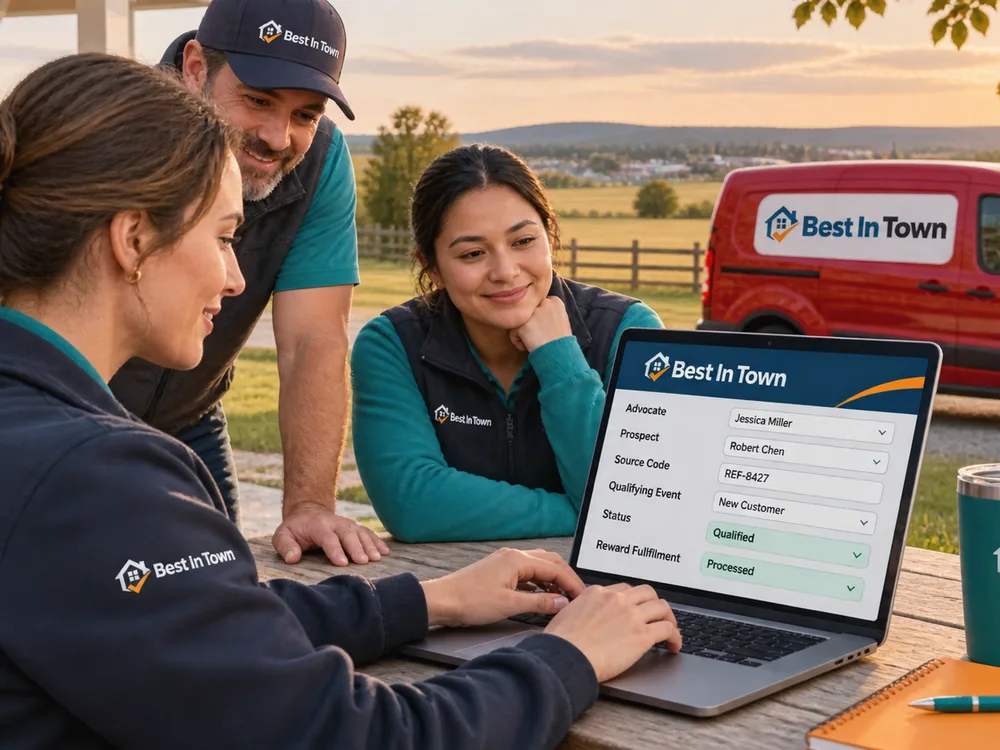
The central record should connect four things: the advocate, the referred prospect, the qualifying event, and the reward. That connection creates an audit trail that staff can follow when a customer asks about credit or when a business reviews program activity.
A program may use a unique referral code, a QR code, a numbered card, or a tracked digital URL. The chosen identifier should remain attached to the record as it moves through statuses such as submitted, contacted, qualified, converted, approved, and rewarded. Status names can be adapted to the business, but each one needs a written definition.
The software should also capture the campaign or offer, relevant dates, reward value or type, fulfillment status, and internal notes. Permission settings help separate administrative work from routine updates. Exportable records are useful for accounting and program review, while duplicate checks reduce repeated entries for the same prospect.
Unique codes and trackable cards connect a referral to the customer, partner, employee, location, or campaign that generated it.
Defined statuses show whether a referral was submitted, qualified, converted, approved for a reward, or fulfilled.
A shared record organizes reward eligibility, approval, value, delivery method, and fulfillment date.
Start and end dates, offer terms, participant groups, and qualifying actions keep multiple promotions distinct.
Activity summaries and exports help a business compare sources, identify unresolved records, and review participation without making unsupported revenue assumptions.
Roles and permissions can limit who changes program rules, approves rewards, or views participant information.
Card Attribution
Printed cards are easy to hand out, but the card itself does not prove who referred a customer or whether a reward became due. Referral cards for business work best when each card carries a unique code or scannable identifier tied to a specific advocate or distribution batch. Generic cards can still promote an offer, but they provide less precise attribution.
The redemption path should be short. A recipient may scan a QR code, enter a code in a form, present the card during a purchase, or provide the referrer's details to a staff member. Whichever route is used, staff need one documented method for matching the referral and handling incomplete information.
Card language should state the qualifying action, expiration terms if applicable, participant eligibility, and any limits. Space is tight, so detailed terms may need to accompany the offer through another accessible format. Before printing a large batch, test the code, QR destination, spelling, and staff workflow. A card that scans correctly but creates an unassigned record still leaves attribution unresolved.
Setup Process
Choose the action that earns credit, such as a completed consultation, paid purchase, or completed service. Define cancellations, returns, duplicate referrals, and existing contacts before launch.
Identify who may refer, who may be referred, what reward is offered, when it becomes eligible, and how it will be delivered. The reward must also fit applicable federal, state, and industry rules.
Select cards, codes, QR scans, digital forms, or tracked URLs based on how customers actually share recommendations. Each route should feed a consistent record.
Assign responsibility for reviewing new referrals, updating milestones, approving rewards, correcting records, and answering participant questions.
Run sample referrals through submission, qualification, approval, and fulfillment. Confirm that notifications, codes, permissions, and reports behave as intended.
Train staff on the written rules, then monitor unresolved referrals, duplicate records, expired offers, and pending rewards. Adjust the workflow when the record shows a recurring problem.

Program Safeguards
A referral incentive program should tell participants exactly what counts. Vague language creates disputes, especially when two people claim the same referral or when a prospect was already in the business's records. A written policy should cover eligibility, attribution windows, duplicate claims, reward timing, exclusions, cancellations, and the process for correcting an error.
Privacy also belongs in the design. Collect only the participant and prospect information needed to administer the program. Access should be limited according to job duties, and retention practices should reflect the type of information stored. Consent and communication requirements can differ by channel and jurisdiction, so legal or compliance advice may be appropriate before using automated email or text outreach.
Rewards can also create tax, disclosure, licensing, or anti-kickback concerns in certain industries. Healthcare, financial services, insurance, legal services, and regulated home services may face special restrictions. Referral tracking software organizes the records, but it does not replace advice about whether a particular incentive is permitted.
Confirm that the system can identify the referrer across the channels the business plans to use. Ask what happens when a customer forgets a code or uses more than one route.
Review how records enter and leave the system, including customer relationship management, point-of-sale, ecommerce, scheduling, and accounting tools. Verify the exact integration rather than assuming compatibility.
Consider who will approve rewards, resolve duplicates, export records, change terms, and deactivate campaigns. A simple program still needs an owner.
Templates, notifications, consent records, and unsubscribe handling should match the channels used. The workflow should distinguish operational updates from marketing messages.
Useful reporting separates referrals by source, campaign, status, date, and reward state. Raw totals are less helpful when unresolved or ineligible records are mixed with completed activity.
Compare setup, subscription, user, transaction, card production, messaging, integration, and support charges. Price depends on the program's volume and technical requirements.
Bring Best In Town the referral process you use now, the rewards you want to offer, and the points where tracking breaks down. A focused review can identify the records, rules, and workflow the program needs.
Call for a Free QuoteFrequently Asked Questions
Cost depends on the number of users, referral volume, features, integrations, messaging, and support required. Some products use a monthly subscription, while others add setup, transaction, card production, or integration charges. Best In Town can discuss the intended workflow so the business can compare costs against the functions it will actually use.
The timeline depends on rule complexity, data preparation, integrations, card production, and approval requirements. A simple code-based workflow can require less preparation than a program connected to customer relationship management, point-of-sale, or ecommerce systems. Testing should cover submission, attribution, qualification, reward approval, and fulfillment before launch.
Yes, individual tracking is possible when each card has a unique code, QR code, or other identifier tied to a referrer or batch. Generic cards usually provide campaign-level information rather than precise person-level attribution. The redemption process must preserve the identifier when the referral record is created.
A system may track several participant groups if it supports separate eligibility rules, permissions, campaigns, and rewards. Each group should have distinct terms so staff do not apply one program's requirements to another. Regulated professions should confirm whether incentives for a particular group are allowed.
Best In Town needs the qualifying event, eligible participants, proposed reward, referral channels, current customer tools, approval process, and expected program activity. Existing cards, spreadsheets, forms, and written terms can also reveal where records are duplicated or lost.
Duplicate claims should be resolved under a written rule established before the program launches. A business might use the earliest valid submission, a defined attribution window, or another documented standard that fits its sales process. The software should preserve timestamps and notes so staff can review the record consistently.
Integration depends on the specific software and the systems already in use. Common connection points include customer relationship management, point-of-sale, ecommerce, scheduling, email, and accounting tools. Confirm whether a connection is native, requires an integration service, or needs custom technical work, and test how updates and duplicate records are handled.
No, the proposed incentive must fit the business's industry, jurisdiction, customer relationships, and communication methods. Certain regulated fields may restrict referral payments, gifts, fee sharing, or promotional claims. Businesses should obtain appropriate legal, tax, or compliance advice before launch when their rules are unclear.
Next Step
Tell Best In Town how customers recommend your business today and where the process loses visibility. Wally Kline can discuss a clearer structure for referral cards, activity records, eligibility rules, and reward fulfillment.