
Planning and setup
This may include offer development, eligibility rules, referral qualification criteria, workflow mapping, and launch preparation. Ask whether revisions are included or billed separately.
Serving United states & surrounding areas
Est. 2026

Referral Program Pricing · United States
Understand the fee structure, program scope, and operating choices that shape your price before deciding how to turn customer recommendations into new sales opportunities.
Pricing Scope
Referral program cost depends on how the program is structured, what Best In Town is asked to provide, and how much ongoing administration the business needs. A straightforward program with one reward and a simple qualification rule has fewer moving parts than a program with several customer groups, tiered rewards, approval requirements, and recurring reporting.
The budget may include initial planning, program setup, reward fulfillment, software or tracking tools, communication materials, and continued management. Each item should be identified separately so the business can distinguish a one-time setup expense from a recurring operating expense. That distinction also makes competing proposals easier to compare.
Founded in 2026 by Wally Kline, Best In Town is built around a practical idea: businesses can give customers a defined way to recommend them rather than leaving word of mouth to chance. Our new page specialists serving United states focus on the structure that turns a recommendation into a trackable referral opportunity. The right starting point is a clear conversation about the customer journey, the desired action, and the work required to administer the program.
Typical Cost Range
A referral program typically costs about $500 to $2,500 for basic planning and setup, while customized programs with software integration, automated communication, and ongoing management may cost $3,000 to $15,000 or more. Referral rewards and platform subscriptions are often separate recurring expenses.
Final pricing changes with participant volume, reward type, tracking method, integrations, fraud controls, reporting, and management frequency. Consumer promotion rules and state-specific requirements may also affect the scope. Best In Town confirms the exact cost after a consultation establishes the program requirements.
Pricing Factors
Scope is the first cost driver. Planning may cover the offer, participant eligibility, qualification event, reward timing, and the messages customers receive. A business that already knows these details may need less strategy work than one building its first formal referral process.
Tracking is another major factor. Manual tracking through unique codes or a controlled spreadsheet may suit a limited program. Larger participant volumes can call for referral software, customer relationship management integration, automated status notices, or an application programming interface. Software subscription and integration charges should be distinguished from Best In Town's service fee.
Reward design affects both the operating budget and administration. A flat cash reward is easy to understand but creates fulfillment and accounting tasks. Discounts, account credits, gift cards, or tiered incentives each have different approval and delivery steps. The quoted service cost should state whether reward funding is included or paid directly by the business.
Program rules also require attention. A useful scope identifies who may participate, what counts as a qualified referral, whether self-referrals are excluded, when a reward becomes payable, and what happens after a cancellation or refund. Businesses operating nationally may need legal or tax advice for their specific promotion, privacy, and reporting obligations.
Budget Checklist
This may include offer development, eligibility rules, referral qualification criteria, workflow mapping, and launch preparation. Ask whether revisions are included or billed separately.
Potential expenses include platform subscriptions, unique code generation, landing forms, CRM connections, data migration, and technical support. Some are one-time charges; others recur monthly or annually.
The business may fund cash, credits, discounts, gift cards, or another approved incentive. Model the reward expense separately from the fee for creating or managing the program.
Email copy, text messages, printed cards, terms, and customer instructions can be part of the initial scope. The price changes when several audiences or communication channels are involved.
Recurring work may include validating referrals, approving rewards, answering participant questions, updating records, and producing reports. Confirm the expected service frequency.
Legal, tax, privacy, and promotional requirements can vary by program design and jurisdiction. Independent professional advice, if needed, may be an additional expense.
Fee Comparison
Referral services can be priced as a flat setup fee, recurring management fee, per-referral charge, success-based fee, or a combination. No structure is automatically cheaper. The better choice depends on referral volume, the amount of administration involved, and how predictable the business needs its monthly spending to be.
A flat setup fee is easier to budget when the deliverables are defined and ongoing help is limited. A recurring fee may fit a program that needs regular validation, communication, reporting, and adjustment. Per-referral or success-based pricing ties part of the expense to activity, but the agreement must define the billable event. A submitted name, qualified lead, completed appointment, and completed sale are different milestones.
Ask for a written scope that separates setup, recurring service, third-party technology, and reward funding. It should also state the billing interval, contract term, cancellation terms, included revisions, ownership of customer data, and what happens when a referral is disputed. Compare the same assumptions across every proposal. A lower setup price can cost more over time if required administration and software are excluded.
Pricing Process
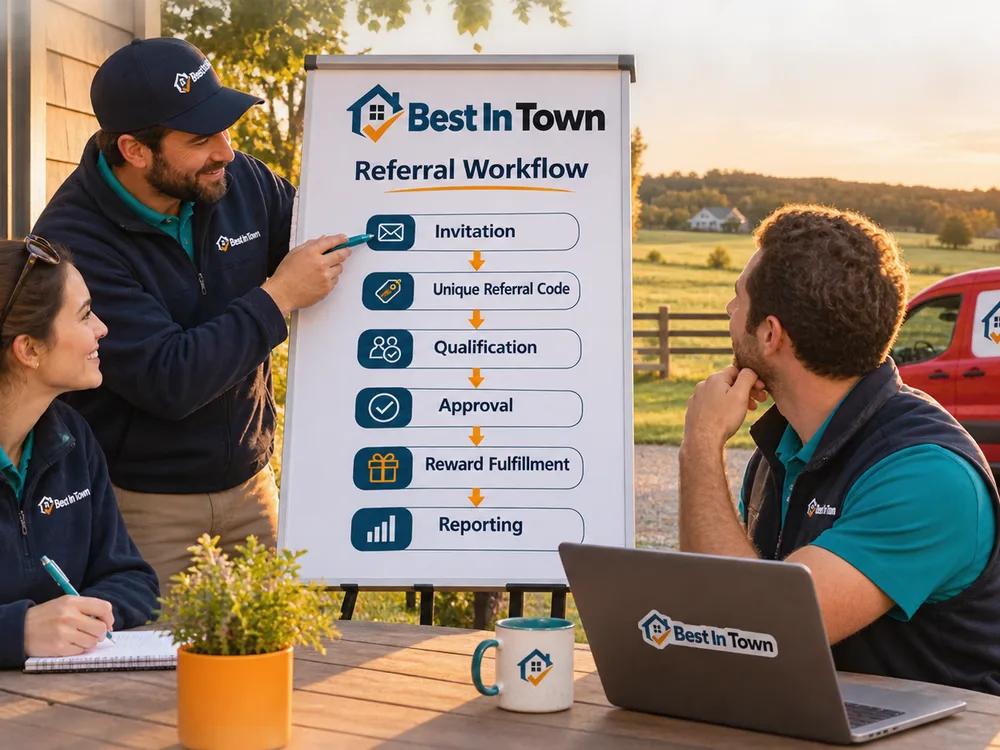
Best In Town starts with the business goal and the event that should count as a referral. This may be an introduction, qualified lead, booked appointment, or completed sale.
The process identifies who can refer, how the referral is submitted, what information is collected, and when each participant receives an update.
Best In Town reviews the proposed tracking method, approval process, incentive format, and fulfillment responsibility. These choices determine much of the setup and administrative work.
The scope distinguishes one-time development from ongoing management, platform fees, and reward funding so the business can assess the full operating commitment.
Before moving ahead, the business can review the included work, assumptions, fee structure, and responsibilities. Material changes to volume, integrations, or program rules may require revised pricing.

Consultation Preparation
A few operating details make a referral program cost discussion more productive. Estimate how many customers may receive an invitation, how often referrals are expected to arrive, and who inside the business can approve a qualified referral. Decide whether the reward should be issued after an introduction, appointment, payment, or another documented event.
Bring information about any CRM, email platform, point-of-sale system, or other tool the program may need to use. Integration can change both the launch schedule and price. If manual tracking is acceptable at first, say so. A phased rollout can test the workflow before the business commits to more automation.
The consultation should also address data access and retention. Determine what participant information is necessary, who can view it, where it will be stored, and how corrections or deletion requests will be handled. Best In Town can then define its service scope, while the business seeks appropriate legal, accounting, or tax guidance for requirements outside that scope.
A good proposal leaves the business able to answer four questions: what is being built, who performs each task, which costs recur, and what event triggers payment. Those answers matter more than a single headline price.
Share your intended referral process, expected participation, tracking needs, and reward approach so Best In Town can identify the work involved and provide service details based on your scope.
Call for a Free QuoteFree 15-Minute Referral Check
Most owners know what they pay for ads. Very few know what a new customer actually costs them, or what one would cost through referrals. Run the numbers below, then book a free 15-minute referral check and we'll work it out properly with you.
Cost per new customer today
$0
Estimated cost per referred customer
$0
Assumes 10 referrals per month and a $199 monthly program cost.
Enter your current cost and proposed rewards to compare them.
This is a rough estimate. Your free referral check uses your real numbers.